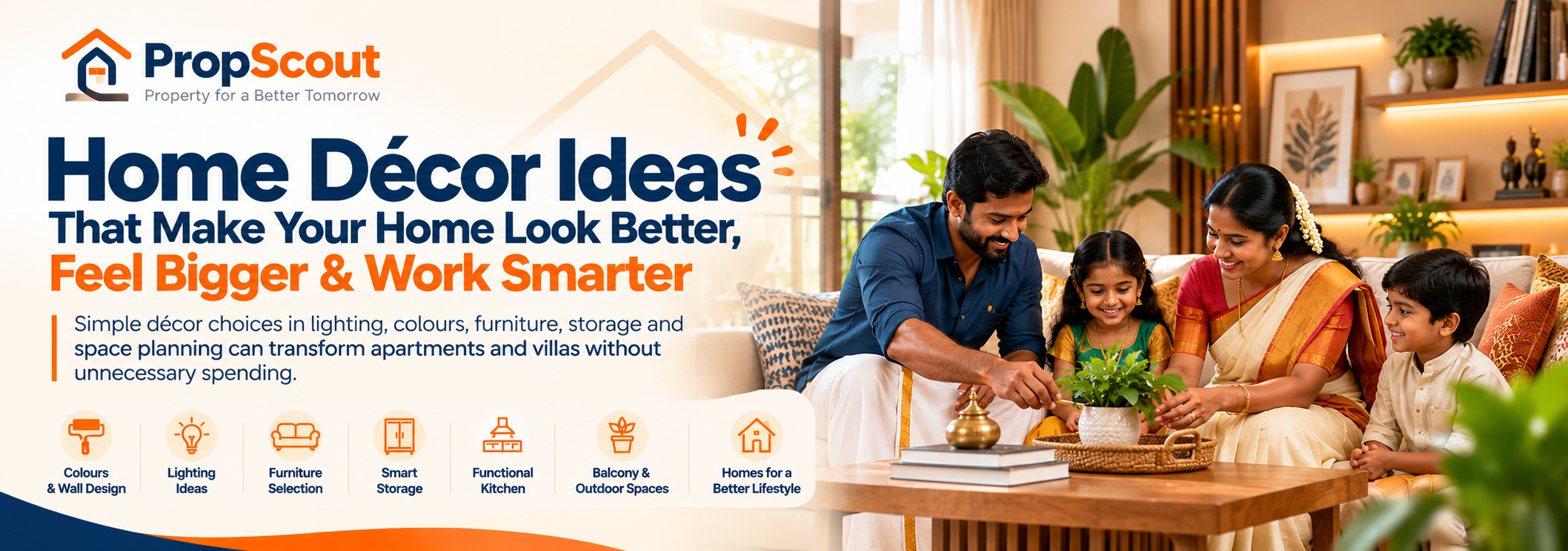
Buying a home is only the beginning. The way you plan and decorate the space can strongly influence how comfortable, functional, spacious and welcoming your home feels every day.
Good Home Décor is not only about expensive furniture or luxury finishes. It is about combining colour, lighting, furniture, storage and practical space planning around the way your family actually lives.
1. Start with Colour, Light & Space
Choose a Consistent Colour Palette
Lighter shades such as off-white, beige, soft grey and warm neutrals can make compact apartments feel more open. Larger villas can accommodate deeper accent colours without making the room feel crowded.
Layer Your Lighting
Combine ambient, task and accent lighting rather than depending on one ceiling light. Warm lighting can improve living and bedroom spaces, while brighter task lighting works better in kitchens and studies.
Maximise Natural Light
Avoid blocking windows with oversized furniture. Light curtains, mirrors and reflective surfaces can help natural daylight travel deeper into the room.
Allow Empty Space
Not every wall or corner needs furniture. Controlled empty space makes interiors feel cleaner, larger and more premium.
2. Make Smaller Homes Feel Larger
Use Large Mirrors
Mirrors can visually increase depth and help reflect natural light across compact rooms.
Choose Raised Furniture
Sofas, consoles and tables with visible legs expose more floor area and make the room feel less heavy.
Use Wall-Mounted Storage
Floating television units, shelves and vertical storage save valuable floor space.
Prefer Multi-Purpose Furniture
Storage beds, extendable dining tables, sofa beds and nested furniture are useful for compact apartments.
3. Choose Furniture Based on Room Size
Furniture should fit the room instead of dominating it. A large sofa or dining table may look impressive in a showroom but can make a smaller home difficult to use.
Measure Before Buying
Measure room dimensions, doors, windows and available circulation space before selecting furniture.
Protect Walking Space
Maintain comfortable movement between sofas, dining areas, wardrobes and doors.
Match Furniture Scale
Compact homes benefit from lighter furniture, while larger villas can comfortably accommodate larger proportions.
Avoid Over-Furnishing
Fewer well-selected pieces often create a more sophisticated interior than filling every available space.
4. Plan Smart Storage from the Beginning
Storage has a major impact on how organised and spacious a home feels. Plan storage according to the family's actual daily requirements.
Entry & Shoe Storage
Create a defined area for footwear, keys, bags and everyday items near the entrance.
Full-Height Wardrobes
Vertical storage uses wall height effectively without taking additional floor space.
Hidden Utility Storage
Create designated areas for cleaning equipment, ironing boards, luggage and household supplies.
Built-In Storage
Integrated storage usually looks cleaner and can use difficult corners better than standalone cupboards.
5. Design the Kitchen for Function First
Work Triangle
Plan practical movement between the refrigerator, sink and cooking area.
Appliance Planning
Reserve proper space and electrical points for refrigerator, chimney, microwave, dishwasher and water purifier.
Accessible Storage
Frequently used cookware and groceries should be stored within comfortable reach.
Utility Connection
Plan washing, drying, cleaning and service areas without interfering with the primary kitchen workspace.
6. Make Bedrooms Comfortable & Practical
Bed Placement
Position the bed without blocking windows, wardrobes or comfortable circulation.
Warm Lighting
Softer bedside and indirect lighting creates a more restful environment.
Charging & AC Points
Plan convenient electrical points before wardrobes and wall finishes are installed.
Flexible Children's Rooms
Select furniture and storage that can adapt as children grow and their needs change.
7. Make Better Use of Balconies & Outdoor Areas
Compact Outdoor Seating
Use weather-resistant chairs, benches or foldable furniture based on available space.
Plants & Vertical Gardens
Greenery can soften balconies without consuming too much usable floor area.
Outdoor Lighting
Warm wall lights or concealed lighting can improve evening usability.
Villa Garden Zones
Larger homes can divide outdoor areas into seating, landscape and activity zones.
8. Bathrooms & Utility Areas Need Equal Attention
Waterproofing & Drainage
Good waterproofing, drainage slopes and plumbing access matter more than premium tiles alone.
Anti-Skid Flooring
Safety is especially important in bathrooms used by children and senior citizens.
Washing & Drying Space
Provide a dedicated location for washing machines, laundry storage and clothes drying.
Service Equipment
Plan space for inverter, gas cylinder, water purifier, electrical panel and other service equipment.
9. Avoid Over-Decoration
Premium interiors are usually created through balance rather than excess. Too many decorative elements can make a home feel smaller and age faster.
Too Many Wall Elements
Give important artwork or feature walls enough breathing space.
Excessive False Ceilings
Heavy ceiling treatment can reduce visual height, particularly in apartments.
Oversized Furniture
Large furniture should be selected only when room dimensions comfortably support it.
Too Many Trends
Use current trends selectively and keep permanent finishes relatively timeless.
10. Think About Resale & Rental Appeal
Home Décor can influence how attractive a property feels to future buyers and tenants. Neutral colours, good lighting, practical storage and clean layouts usually appeal to a wider audience.
For investment properties, avoid excessive spending on highly personalised interiors that may not improve rental income or resale value.
11. Plan Customisation Before Construction Is Complete
Buyers purchasing an under-construction apartment or villa should understand what changes the developer permits before flooring, electrical and finishing works are completed.
Electrical Points
Plan television, charging, appliance and work-from-home requirements early.
Kitchen Planning
Finalise appliance locations and utility requirements before cabinets are designed.
Home Automation
Provisioning during construction can be cleaner than retrofitting later.
Flooring & Bathrooms
Where the developer permits changes, selecting materials early can reduce future rework.
12. Your Home Décor Should Match Your Lifestyle
Families with Children
Prioritise storage, easy-maintenance surfaces and open activity space.
Senior Living
Focus on easy movement, anti-skid materials, good lighting and accessible storage.
Work from Home
Create a dedicated workspace with natural light, electrical points and ergonomic furniture.
NRI & Low-Maintenance Homes
Durable finishes, smart-home controls and easy-to-maintain materials can be more practical.
PropScout View: Good Décor Adds Comfort Before It Adds Style
The ideal Home Décor balance is:
Function + Comfort + Light + Storage + Personal Style
A good home is not only about location, built-up area or price. It is also about how efficiently and comfortably the space works for your family every day.
PropScout Realtors – Think About the Home Beyond the Purchase
PropScout Realtors Pvt. Ltd. is a TNRERA-registered, Women Entrepreneur-led Real Estate advisory supporting property buyers across Chennai, Coimbatore, Trichy and other Tamil Nadu markets.
We encourage customers to consider space planning, family requirements, customisation possibilities and long-term usability while evaluating apartments and villas.
Disclaimer: Interior design, structural modifications, electrical changes and plumbing alterations should be carried out only after confirming building approvals, developer permissions and appropriate professional advice.
Comments (1)
Your CommentAmazing!
Lorem Ipsum is simply dummy text of the printing and typesetting industry
Anush
July 15, 2026